
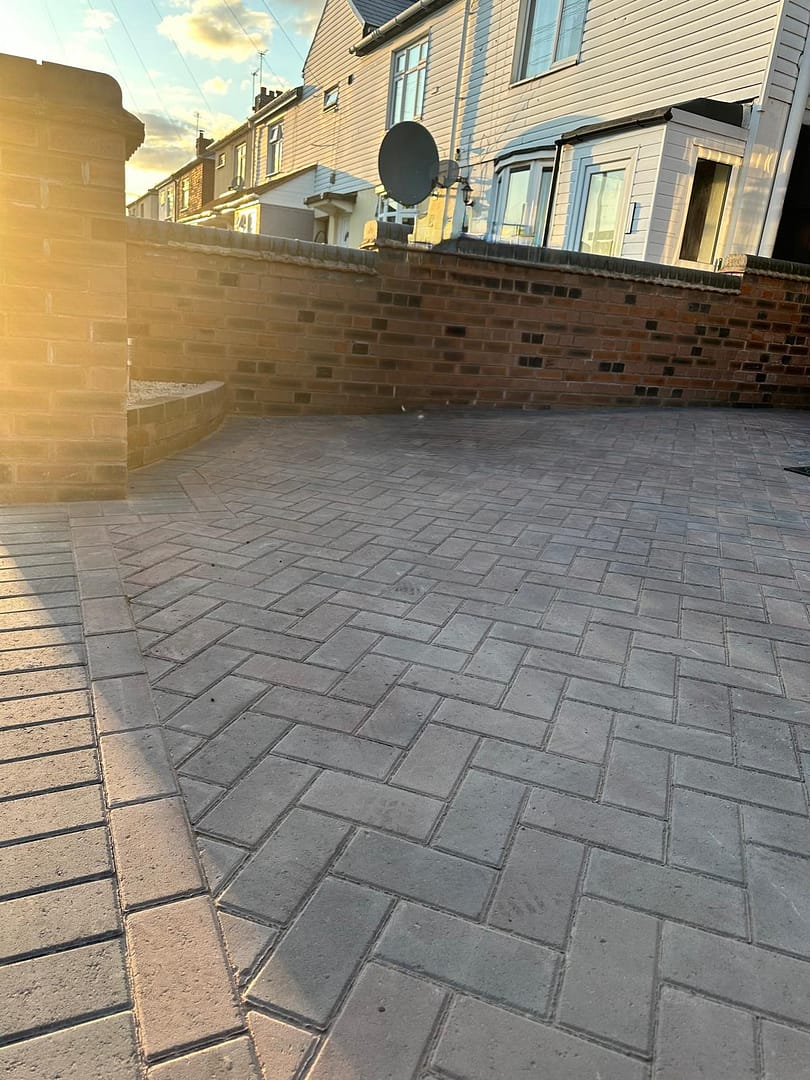
Block paving, a popular choice for driveways, patios, and pathways in Dudley, offers a blend of durability, aesthetic appeal, and versatility. This method of paving uses individual blocks or bricks and can be laid in various patterns and colours to create a unique finish. Dudley, with its mix of traditional and modern architecture, finds block paving a complementary choice for both residential and commercial properties. The local climate, which can range from wet winters to moderately warm summers, also makes block paving a practical solution due to its weather-resistant qualities.
Traditionally, the materials used in block paving include clay bricks or concrete blocks. Each material has its benefits, such as the charm and longevity of clay or the cost-effectiveness and uniformity of concrete. As urban and suburban areas in Dudley continue to develop, the demand for high-quality, sustainable, and attractive paving solutions like block paving has significantly increased. This has encouraged many local contractors to specialize in this area, providing tailored solutions to fit the specific needs and preferences of Dudley residents.
The introduction of block paving to Dudley’s landscapes has not only enhanced the visual appeal of its properties but also contributed to the overall urban aesthetic. Whether it’s restoring a period property’s driveway to match its historic charm or adding a modern touch to a new build, block paving offers a solution that respects and enhances the existing surroundings.
Key Benefits of Choosing Block Paving
One of the primary benefits of block paving is its incredible durability and strength. Designed to withstand heavy loads, block paving is an ideal choice for driveways and areas that bear the weight of vehicles. Unlike other materials that may crack under pressure or weather extremes, block paving retains its integrity over time, ensuring a long-lasting investment. This resilience also makes it a cost-effective choice, as the need for repairs or replacements is significantly reduced.
Another advantage of block paving is its versatility in design. With a wide range of colours, shapes, and sizes available, homeowners and businesses in Dudley can tailor their outdoor space to reflect their style and complement the building’s exterior. From herringbone and stretcher bond to basketweave and circular patterns, the possibilities are endless. This flexibility allows for personalisation and can be adapted to fit any specific area, no matter how irregular the space may be.
Environmental sustainability is another key benefit of choosing block paving. Many block paving options are now made from recycled materials, making them a more eco-friendly choice. Furthermore, the gaps between the blocks allow for proper drainage, reducing runoff and decreasing the burden on urban drainage systems. This permeability makes block paving an excellent option for flood-prone areas in Dudley, contributing to more sustainable urban planning.
Exploring Various Styles of Block Paving
Block paving in Dudley offers a variety of styles that cater to different tastes and property types. The most common style is the herringbone pattern, known for its strong interlock characteristics, making it suitable for areas with high traffic or load-bearing requirements. The herringbone pattern can be installed in either a 45-degree or 90-degree angle, each offering a distinct look and feel.
For those seeking a more subdued appearance, the stretcher bond pattern is an excellent choice. This style uses stretchers—longer faces of the bricks—laid in rows, creating a clean, linear look that is simpler and often faster to install. It’s particularly popular among contemporary properties in Dudley that favour minimalistic designs. Alternatively, the basketweave pattern, which uses pairs of blocks alternated at 90 degrees to each other, offers a quaint, timeless appeal, ideal for complementing traditional homes.
The choice of material also plays a crucial role in the style and longevity of the paving. Clay bricks, offering rich, natural colours that age beautifully, are perfect for achieving a classic look. In contrast, concrete blocks provide a more uniform colour and are often treated with a sealant to mimic the finish of natural stone, offering both aesthetic appeal and enhanced durability against Dudley’s weather conditions.
How Block Paving Enhances Property Value
Investing in block paving can significantly increase the market value of a property. A well-designed and properly installed block paved driveway or patio immediately boosts curb appeal, making a property more attractive to prospective buyers. The aesthetic versatility of block paving allows it to enhance the overall appearance of the property, aligning with Dudley’s varied architectural styles from historic to contemporary.
Beyond aesthetics, the functional benefits of block paving such as its durability, low maintenance, and permeability also contribute to its value enhancement. Properties with block paving are seen as better maintained and more sustainable, qualities that are highly prized in today’s real estate market. This is particularly relevant in Dudley, where environmental concerns and urban planning are key considerations for property investments.
Moreover, the longevity of block paving means that the benefits are long-term, reducing future expenditures for new owners. This can be a compelling selling point, as prospective buyers are often looking for homes that require minimal additional investment. The assurance that the paving will withstand environmental elements and everyday use with little need for repair adds a tangible value that can be reflected in the property’s overall market price.
Installation Process of Block Paving
The installation of block paving must be meticulously planned and executed to ensure its longevity and effectiveness. The process begins with a thorough assessment of the site, considering factors such as soil type, drainage needs, and the intended use of the paved area. This assessment informs the preparation stage, where the ground is excavated to a suitable depth, typically between 150mm and 200mm, and a sub-base layer of crushed stone is applied and compacted.
Following the sub-base, a layer of sharp sand is laid and also compacted. This layer provides a bed for the blocks to sit on. The blocks are then laid according to the chosen pattern, carefully aligned and spaced to allow for jointing material, usually kiln-dried sand, to be swept into the gaps. This jointing sand plays a crucial role in locking the blocks together and providing additional stability.
Finally, the installed area is compacted once again using a plate compactor. This consolidation ensures that the blocks are firmly embedded into the sand beneath, eliminating any gaps and providing a smooth, even surface. Edge restraints are also installed to prevent the blocks from moving laterally. The final result is a robust, attractive surface ready to withstand the demands of its environment.
Maintenance Tips for Block Paving
Maintaining block paving is relatively straightforward, which adds to its appeal. Regular cleaning, involving sweeping to remove debris and occasional washing with a mild detergent, can keep the paving looking fresh and clean. For areas in Dudley that experience frequent rainfall, preventing moss and weed growth is crucial. This can be managed through periodic treatments with weed killers or by manually removing any growth that appears.
Sealing block paving is another maintenance option that many choose to enhance the paving’s colour and protect it against staining and weather damage. The sealant helps to close the pores in the paving materials, making it more difficult for stains to penetrate and for algae to take hold. Although not essential, sealing can prolong the pristine appearance of the paving and reduce the frequency of intensive cleaning.
It’s important to address any signs of settling or movement early. If blocks become loose or uneven, they should be re-adjusted as soon as possible to prevent further damage and to maintain the integrity of the entire paved area. Regular checks will help ensure that any necessary repairs are handled promptly, preserving the appearance and functionality of the block paving for years to come.
Comparing Block Paving with Other Materials
When compared to other materials such as asphalt or poured concrete, block paving offers distinct advantages, particularly in terms of aesthetic appeal and long-term performance. Unlike concrete or asphalt, which present a uniform surface, block paving allows for creative design and can be easily repaired by replacing individual blocks instead of resurfacing the entire area. This not only makes repairs simpler and cheaper but also minimizes the time the area is out of use.
In terms of durability, block paving tends to stand up better to Dudley’s fluctuating weather conditions. Concrete can crack in extreme cold, while asphalt may soften during hot weather. Block paving, on the other hand, is more resilient to these changes due to its flexibility and the gap between the individual blocks which allows for thermal expansion.
Environmentally speaking, block paving is often seen as a superior option. Its permeability reduces runoff, decreasing the chance of flooding and lessening the impact on municipal drainage systems. Many block paving products are also made from recycled materials, appealing to those looking to make environmentally responsible choices in their landscaping and construction projects.


